


What Is a Digital Business Card? (And Why Static Cards Are Obsolete)
If you have ever left a meeting wondering whether someone actually saved your contact details, you are not alone.
Paper business cards were designed for a slower, more static world. Today, introductions happen quickly — at events, over video calls, through messages, and often on a phone. A digital business card reflects this shift by replacing paper cards with a dynamic, shareable profile that works instantly.
Instead of hoping someone types your details later, digital business cards let people save your contact immediately. That single difference is why static paper cards are becoming less practical in a digital-first world.
If you are new to the concept, it may help to see how to create a digital business card in just a few minutes, from setting up your profile to sharing it instantly.
What Is a Digital Business Card?
A digital business card is an online profile that brings your professional identity together in one place. It typically includes:
- Your name, role, and company
- Phone number and email
- Website and professional or social links
- Optional media, highlights, or key actions
Rather than handing over a printed card, you share your profile digitally. The person you meet can open it instantly and save your contact without typing or scanning text manually.
Because these profiles can be updated at any time, digital business cards are often called dynamic business cards. They stay current as your role, brand, or business evolves.
Knowing what to include matters just as much as having a card at all. This guide explains what to include on a digital business card so people know exactly how to follow up after meeting you.
Static vs Digital Business Cards
The biggest difference between paper and digital business cards is not the format. It is what happens after the exchange.
| Feature | Static Paper Cards | Digital Business Cards |
|---|---|---|
| Can be updated later | No | Yes |
| Instant sharing | No | Yes |
| Save directly to contacts | No | Yes |
| Supports links and media | No | Yes |
| Tracks engagement | No | Yes |
| Long-term cost | Reprints | One-time |
Paper cards capture a moment.
Digital cards continue working long after the first meeting.
Why Digital Business Cards Deliver Better ROI
From a practical perspective, digital business cards tend to deliver better value over time.
Higher Contact Save Rates
When saving a contact takes one tap or scan, people are far more likely to do it. Fewer steps lead to better follow-up and fewer missed connections.
No Reprints or Waste
Phone numbers change. Job titles change. Brands evolve. With paper cards, every update means reprinting. With digital cards, updates happen instantly.
Works in Real-World Situations
Whether you are at a conference, meeting someone for coffee, or following up after a video call, digital business cards work in moments where paper cards often do not.
If you want a modern card that works both in person and online, you can explore available options here:
How NFC Digital Business Cards Work
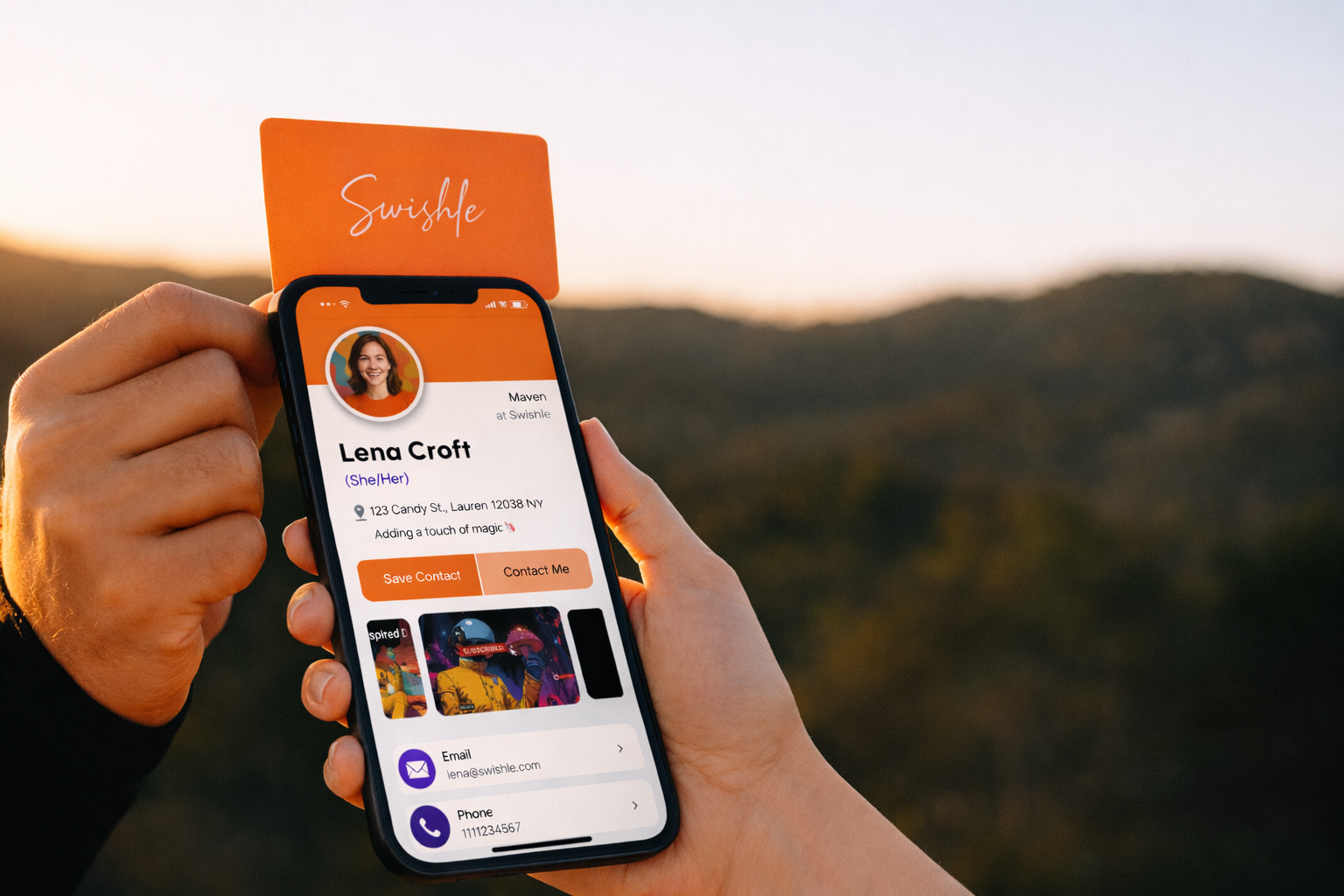
NFC, or Near Field Communication, allows you to share your profile with a simple tap.
A typical exchange looks like this:
- You tap your NFC card or device
- The other phone opens your digital profile automatically
- The recipient saves your contact or shares theirs in return
The person receiving your details does not need to install an app, which makes NFC one of the fastest ways to exchange information in person.
NFC is powerful, but it is not the only option. Many professionals also rely on QR codes, especially in remote or mixed-device situations. This comparison of NFC vs QR code digital business cards explains when each method works best.
Going Beyond Basic Digital Business Cards
Not all digital business cards are built the same way.
Some focus only on sharing contact details. Others are designed to support ongoing networking and follow-up. Depending on how you connect with people, features that often matter include:
- Spotlight links or media to highlight important content
- Business card scanning to digitize paper cards
- Custom virtual meeting backgrounds for online calls
- Insights into profile views and engagement
- Full control over saving and managing contacts
- Flexible value based on how often you network
For people who rely on follow-up and relationship building, these details often matter more than the tap itself.
Why Static Business Cards Are Becoming Less Effective
Paper business cards struggle in modern networking because they are easy to lose, hard to update, and require manual effort to use later.
A dynamic business card adapts as your goals change. It supports real follow-up instead of relying on memory or manual data entry. That flexibility is what makes digital cards better suited to how people connect today.
Who Should Use a Digital Business Card?
Digital business cards are especially useful for:
- Founders and entrepreneurs
- Sales and business development teams
- Recruiters and job seekers
- Consultants and freelancers
- Event attendees and exhibitors
If your contact information changes or follow-up matters, digital cards are usually the more practical choice.
The Future of Business Cards Is Digital
As professional interactions become faster and more connected, static paper cards no longer fit how people actually network.
Digital business cards are not a trend. They are a reflection of how connections happen today.
Explore Modern Digital Business Cards
Modern digital business cards are designed to work in real-world situations — whether you are networking in person, sharing remotely, or following up later.
If you are ready to move beyond paper cards, you can explore NFC and QR digital business cards designed for flexible, modern networking:
Frequently Asked Questions
What is the main benefit of a digital business card?
The main benefit is instant contact saving. People can store your information immediately, which improves follow-up.
Do digital business cards require an app?
No. Most digital business cards open in a web browser, even for first-time recipients.
Can digital business cards replace paper cards completely?
For many people, yes. NFC and QR cards combine a physical presence with a fully digital experience.
Are digital business cards secure?
Reputable platforms use standard web security practices and give users control over what information is shared.
Next article: How to Create a Digital Business Card in 5 Minutes